Our Projects
National Strategic Project
Methanol for Biofuel
In Indonesia Methanol is used as the building block for Biofuel production to fulfil Government’s B40 program.
BPI has engaged with a leading technology licensor to build a 1 million ton per year’s Natural Gas to Methanol plant facility in Bojonegoro, East Java, using advanced, energy-efficient technology to reduce emissions and waste.
The project will capture and make use of significant CO2 content, hence minimizing greenhouse gas emissions, aligning with global climate goals. Water and energy will be carefully managed to avoid unnecessary waste and protect local ecosystems. The project will create thousands of jobs during construction and permanent skilled positions during operation. The highest safety standards will be applied to protect workers and nearby residents.
Compliance with global institutions standards ensures the project meets strict financial, environmental, and social benchmarks. Regular reporting and dialogue with communities, regulators, and investors will keep everyone informed and engaged.
Project Overview
- Recipient of Government's National Strategic Project Status
- Total Investment of 1 Billion USD
- Capacity: 1,000,000 Ton Methanol/year
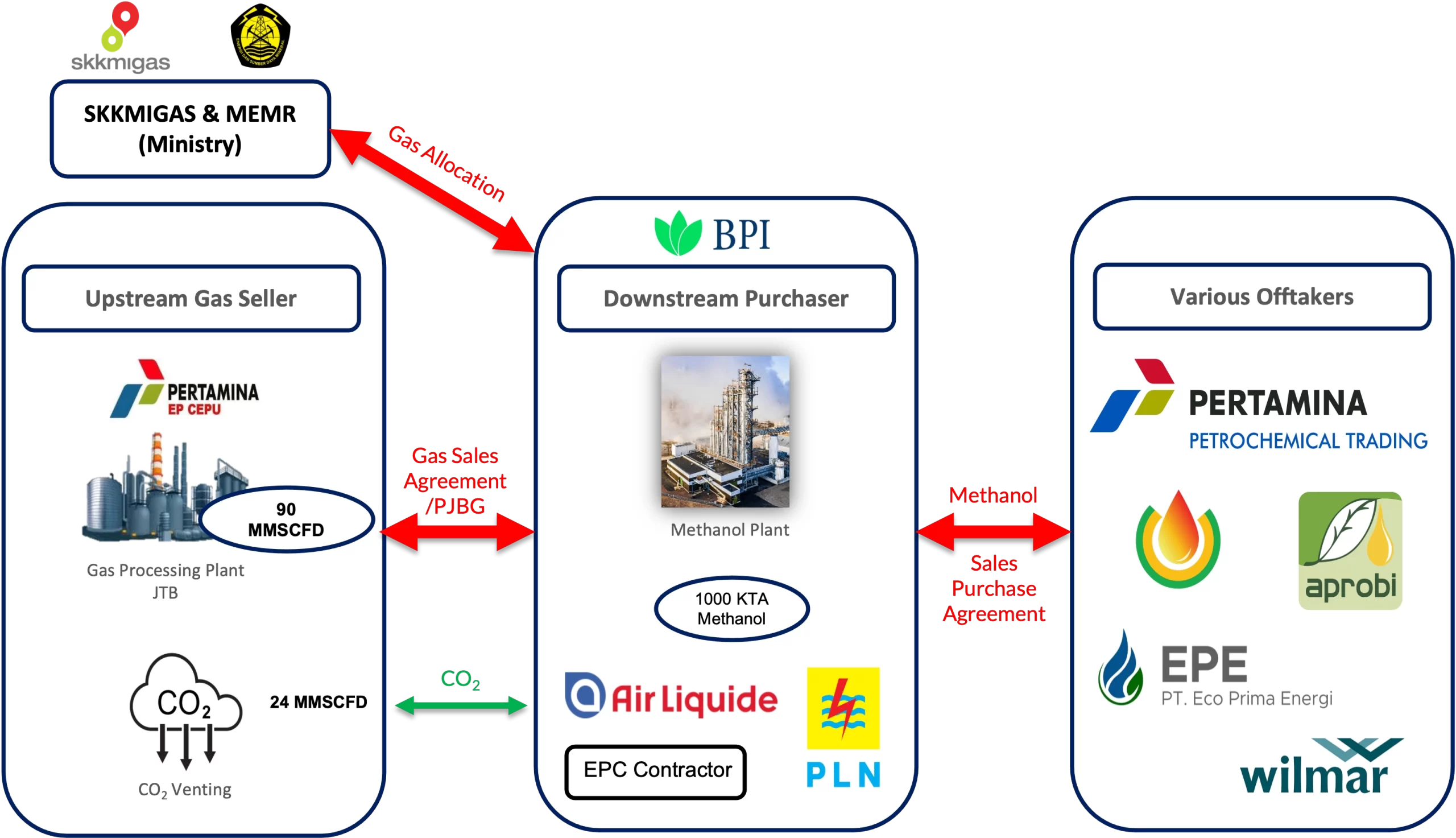
- Utilising 90 MMSCFD Natural Gas produced by Pertamina EP Cepu Jambaran Tiung Biru Field
- Low Emission Methanol Plant using the latest technology by Air Liquide France
- This Plant will have the largest production capacity of Methanol in Indonesia
Business Structure
Methanol Plant Bojonegoro
Project Site
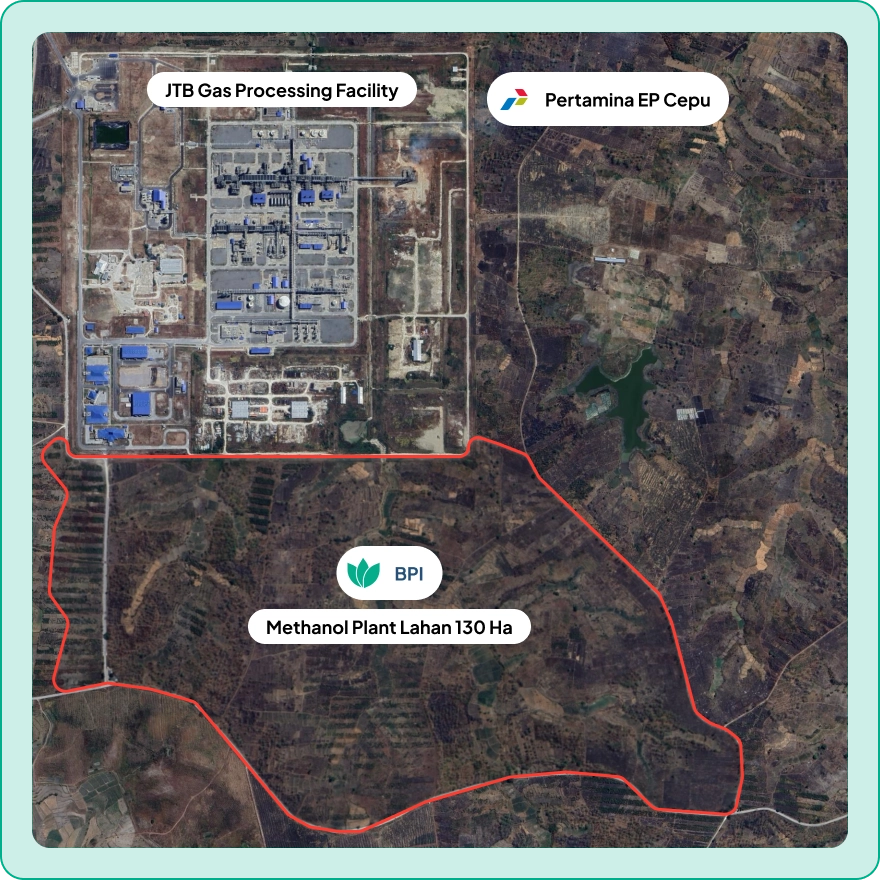
- Site Location: Desa Bandungrejo, Ngasem, Bojonegoro, 130 Hectare, next to Jambaran Tiung Biru (JTB) gas field of Pertamina EP Cepu
-
Process Description
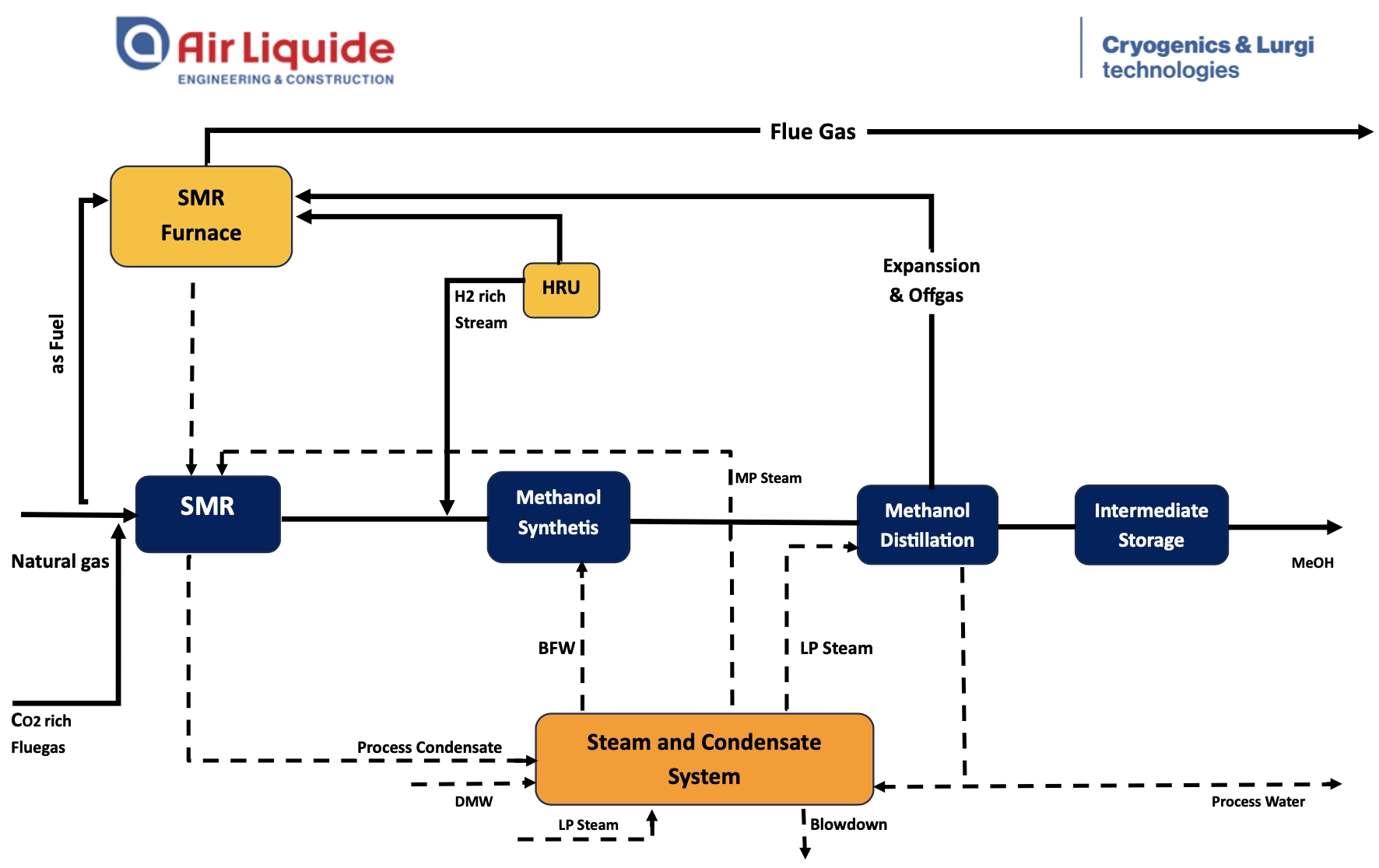
- Feedstock Handling : Natural gas feed is first separated from any liquid. CO2-rich flue gas feed is compressed and then mixed with natural gas.
- Hydrodesulfurization : remove sulphur traces to protect downstream catalysts from sulphur poisoning.
- Prereforming : convert the higher hydrocarbons within feedstock into CH4. The use of a prereformer will reduces the capacity and size of Steam Methane Reformer (SMR), thus reduce the initial investment.
- Steam Reforming : The feedstock is converted into syngas (H2, CO, CO2) in a strongly endothermic reaction with the help of a catalyst.
- Methanol Synthesis : Methanol is synthesized from H2, CO and CO2 in the presence of a catalyst.
- Distillation : Methanol product is purified through distillation process to achieve Grade AA, specification O-M-232N.
BPI Methanol Plant Production Process Diagram
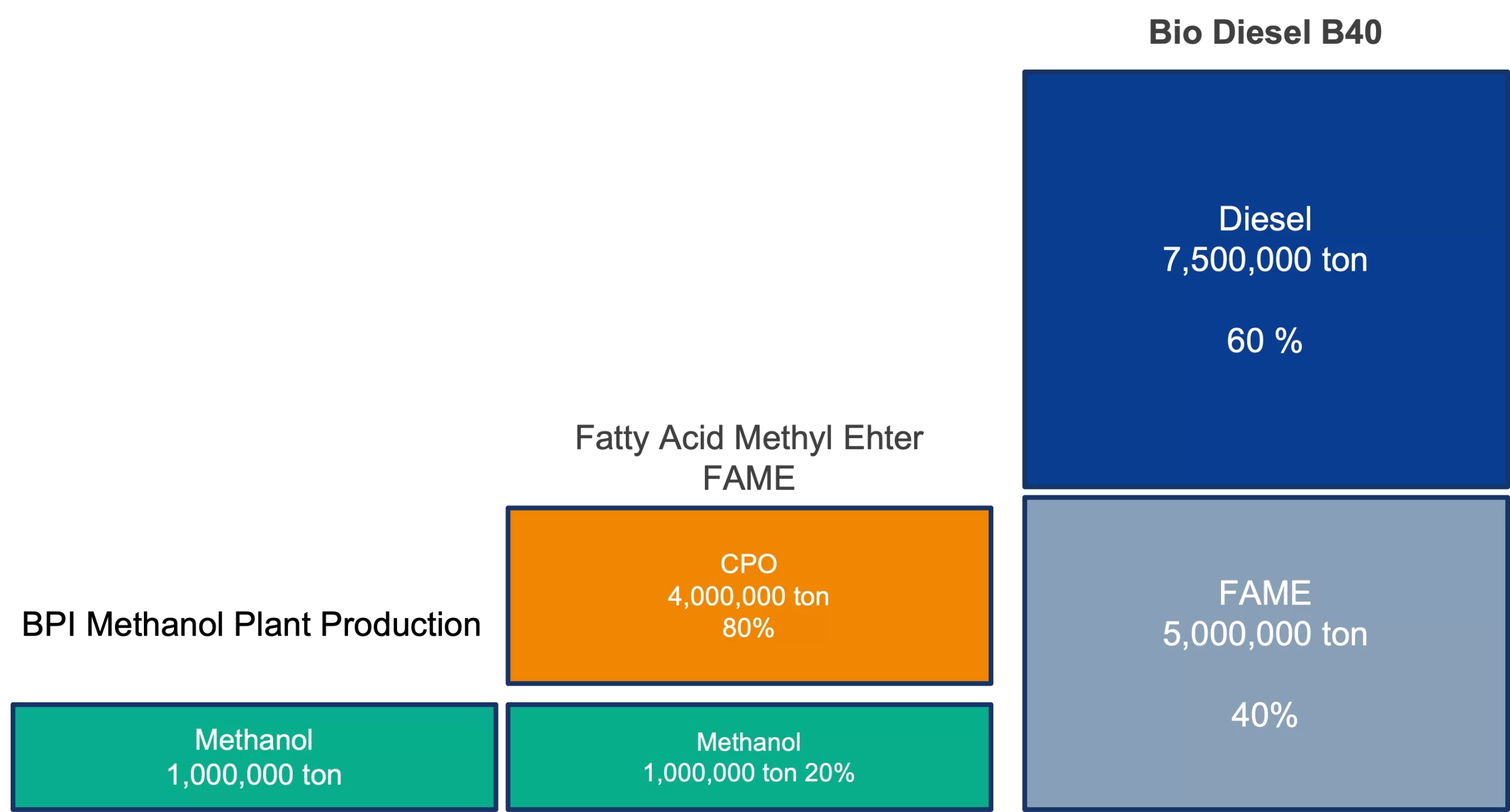
Bio Diesel B40 produced by BPI Methanol:
12,5 million ton/year
Multiplier Effect to Domestic Economy
Producing 1 Million ton of Methanol per annum for Bio-Diesel for domestic consumption
1 Million Tons of Methanol Production per year
BPI's methanol production will increase domestic supply by 1 million tons of methanol per year
Significant Reduction of Methanol Import
The production will significantly reduce methanol imports by 80% each year. This will save foreign exchange worth $340 miilion per year
Positive Impact to Trade Balance
Methanol produced by BPI with Fatty Acid from vegetable oil (CPO), will be sufficient to produce 15 million kiloliters of B40 Bio Diesel, equivalent to a reduction in diesel import of USD $3 billion per year
Job Creation
The multiplier effect of downstreaming is significant for the economy and job creation. During construction, the plant will create approximately 6,000 jobs and during operation of 600 jobs
Clean Production Process
By using CO2 from the gas field as additional feedstock, it will increase productivity and at the same time contributing on carbon emission reduction
National Strategic Project
Ethanol for Biofuel
Ethanol is used for Biofuel as greener substitution for gasoline. This Ethanol project is one of Indonesia government program to fulfil the national energy need and to reduce the import of crude oil / gasoline. BPI is planning to build a 30,000 ton per year Ethanol plant facility in Bojonegoro, East Java, using Sweet Sorghum as feedstock. To support this plant, BPI will cooperate with Perhutani to plant Sweet Sorghum in Perhutani land in Bojonegoro.
Project Overview
- Recipient of Government's National Strategic Project Status
- Total Investment of 50 Million USD
- Capacity: 30,000 Ton Ethanol/year
- Feedstock : Sweet Sorghum
- Plantation : develop up to 15,000 hectares on Perhutani’s land around Ethanol Plant location and partnership with local farmers
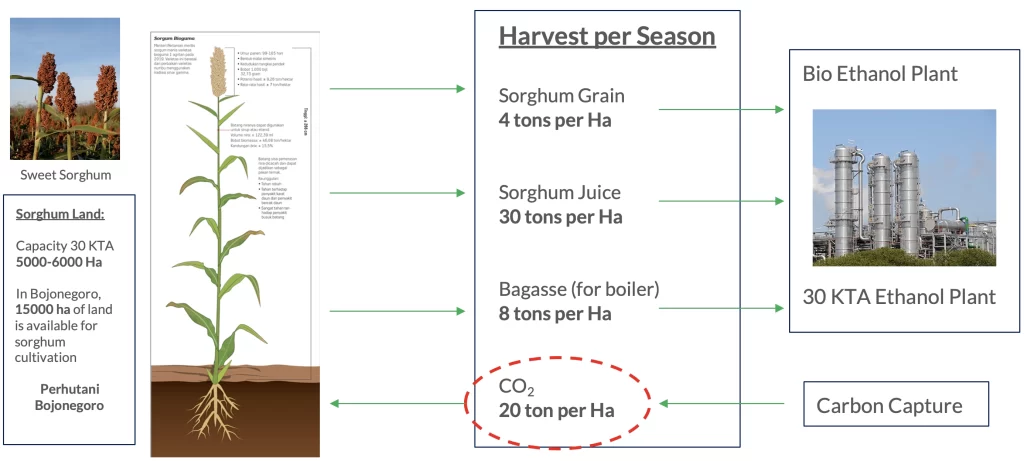
Why Sorghum
- Sorghum as a Feedstock: Sorghum is a better alternative to corn and sugarcane for ethanol production due to its drought tolerance, high yield, and less water and fertilizer requirements.
- Yields: Sweet sorghum can produce up to 8,000 liters of ethanol per hectare, which is more than maize and sugarcane. Waxy sorghum varieties can also improve the efficiency of starch conversion.
- Cost Efficiency: Sorghum's lower production costs compared to other feedstocks and the value of its co-products can improve profitability.
The Production Process
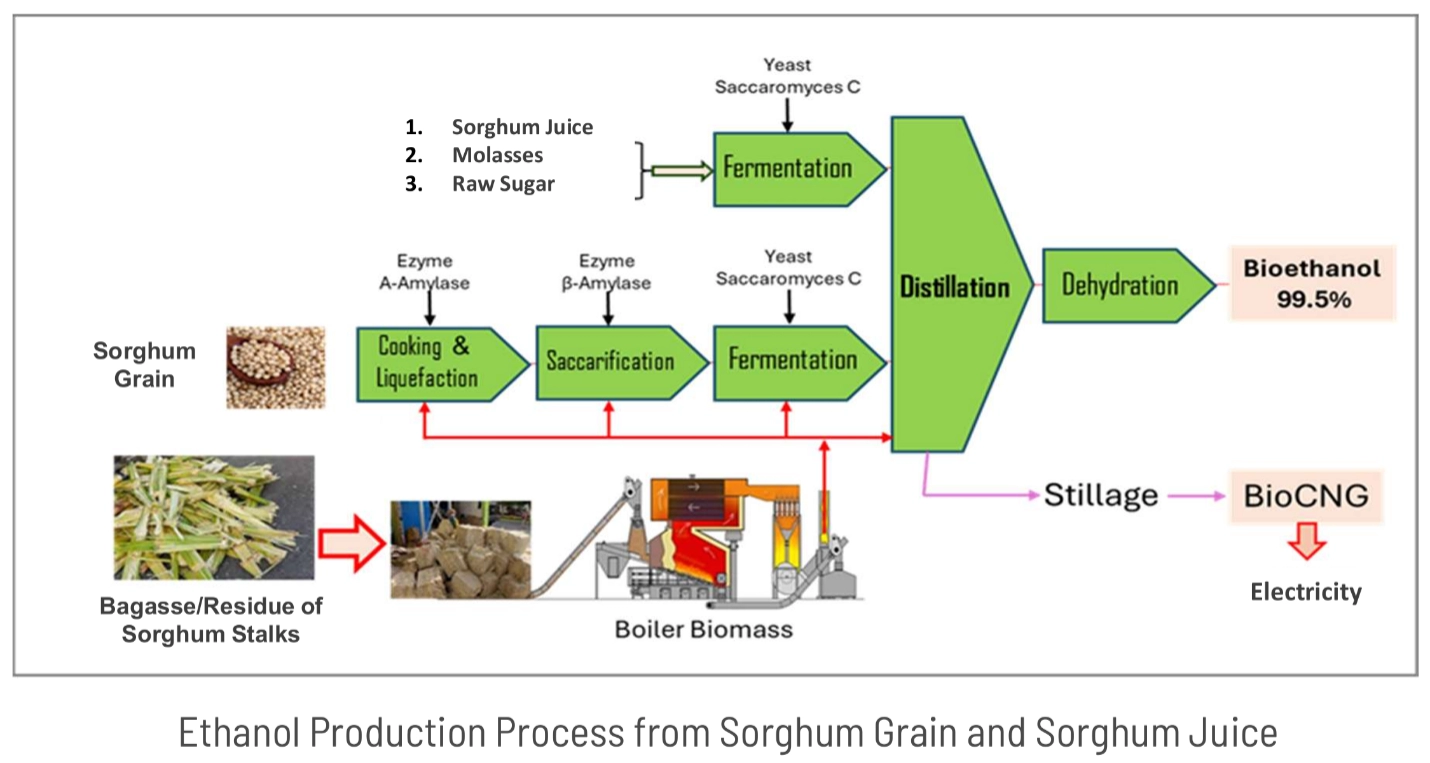
The process of converting sorghum to ethanol generally follows these steps:
- Preparation: The sorghum stalks are cleaned, crushed, and the juice is squeezed out.
- Hydrolysis: For grain sorghum or stalks, enzymes are added to break down starches into fermentable sugars like glucose. For sweet sorghum, this step is often simplified as the stalk juice already contains high levels of sugar.
- Fermentation: Yeast (Saccharomyces cerevisiae) is introduced to the sugar-rich liquid in a sterile, anaerobic environment. The yeast consumes the sugars and produces ethanol and carbon dioxide.
- Distillation: The fermented liquid (mash) is heated to separate the ethanol from the water and other byproducts. This process can concentrate the ethanol to about 95% purity.
- Dehydration: Further processing is required to remove the remaining water to achieve fuel-grade ethanol, typically around 99.6% purity.
- Co-products: The remaining solids, known as distillers dried grains with solubles (DDGS), are a valuable co-product often used as animal feed. The liquid byproduct, vinasse, can be treated and used as a liquid fertilizer.
Project Coal Gasification
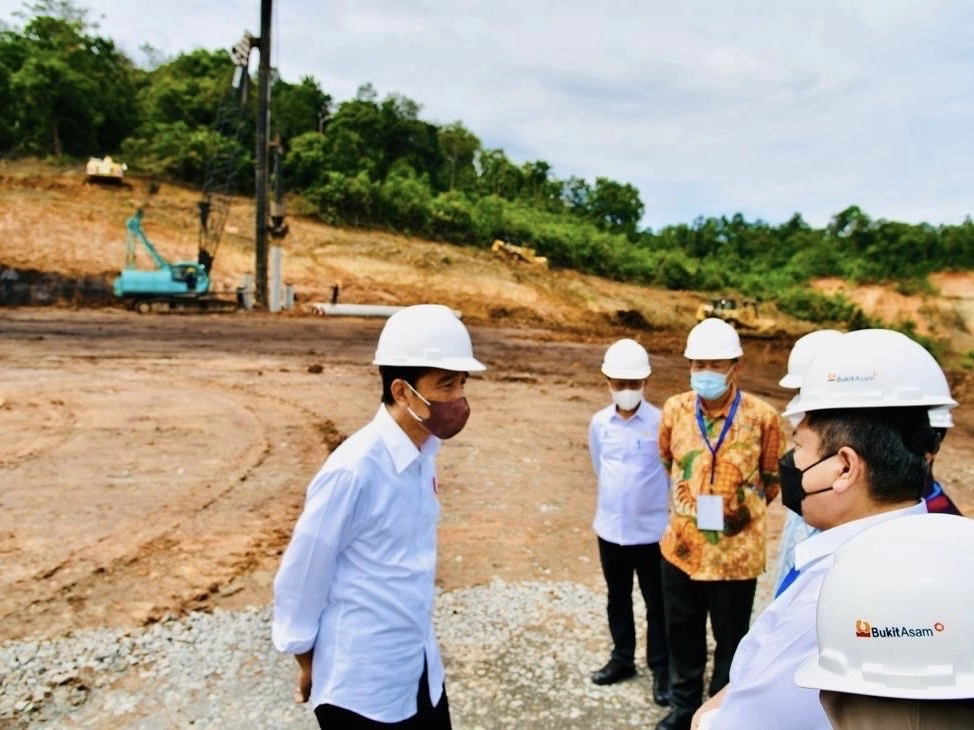
In 24 January 2022, President Indonesia Joko Widodo commenced the groundbreaking of Coal to DME project that included PT Batubara Bukit Asam, AirProduct, and PT Butonas Petrochemical Indonesia as AirProduct’s local partner.
This project is part of the effort to achieve the net-zero emission target and has been designated a National Strategic Project.
The Indonesian government provides support through regulations such as Government Regulation No. 26/2022, which provides a 0 percent tariff for coal as a raw material for DME, and the Presidential Regulation concerning the Provision, Distribution, and Pricing of Dimethyl Ether as Fuel.